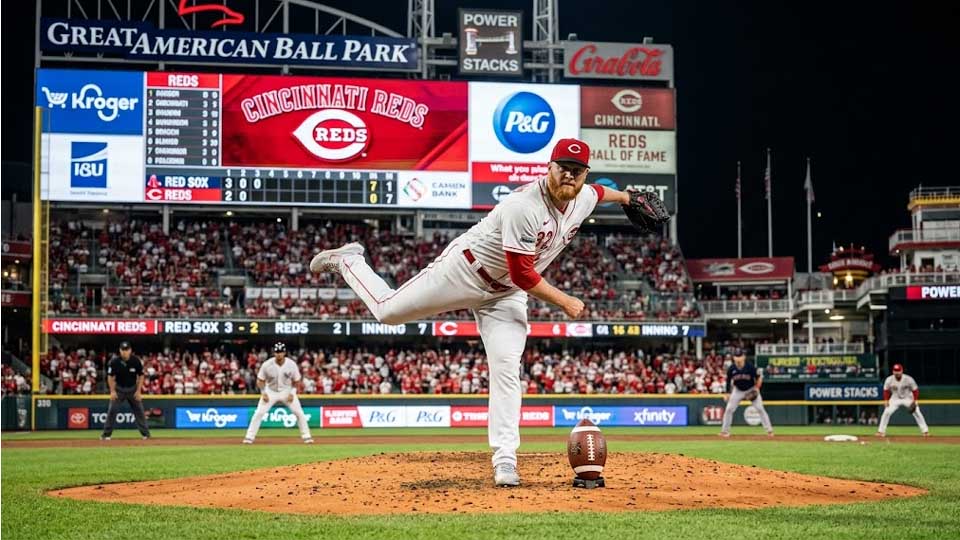
Using TriSync Sports With The Pitcher Punt Strategy: Maximum Risk, Maximum Reward in DFS Baseball
There's a moment every DFS grinder experiences: You're staring at a slate with elite hitters at Coors Field, the Yankees facing a batting practice pitcher, the Dodgers stacked with lefties against a RHP who can't get them out, and the Braves looking to explode at a bandbox park. You want them all. You need them all. But you can't afford them all.
Your $11,000 ace pitcher is eating up 22% of your salary. If you could just not spend that money on pitching, you could roster five elite bats instead of three good ones and two mediocre fills. You could stack two teams instead of one. You could pay up for the obvious plays everyone else is praying come down in price.
Enter the Pitcher Punt Strategy, the DFS equivalent of selling out for offense, playing small ball in reverse, and betting that runs scored will matter more than runs prevented. This strategy is polarizing. Some pros swear by it in specific slate conditions. Others consider it reckless gambling. The truth lies somewhere in between: The Pitcher Punt Strategy is a nuclear option that works brilliantly in the right situations and fails spectacularly in the wrong ones.
Let's break down exactly when to deploy this high-wire act, how to execute it properly, and, most importantly, how to avoid the catastrophic mistakes that turn a calculated risk into a financial disaster.
Understanding the Pitcher Punt Philosophy
The Core Concept
Traditional lineup construction:
- Pitcher #1: $9,000-$11,000 (18-22% of salary)
- Pitcher#2: $5,500-$7000
- Hitters: $32,000-$35,500 (64-71% of salary distributed across 8 players)
- Average hitter salary: $4,000-$4,438
Pitcher Punt construction:
- Pitcher #1: $5,500-$7,500 (11-15% of salary)
- Pitcher #2: $5,500
- Hitters: $37,000-$39,000 (74-78% of salary distributed across 8 players)
- Average hitter salary: $4,625-$4,875
The trade-off:
By punting pitchers, you gain $2,500-$6,000 in hitting salary. This allows you to:
- Upgrade two or three hitters from $4,000 range to $5,000-$6,000 range
- Stack a mostly elite batting lineup that you otherwise couldn't afford
- Roster a mega-star, or two, in the same lineup
- Play both sides of a Coors Field game
- Combine the Yankees stack AND the Dodgers stack
What you're sacrificing:
The most consistent scoring position in DFS baseball. A quality pitcher ($9,500) typically delivers 20-28 points with high reliability. A punt pitcher ($6,500) might deliver anywhere from -2 to 18 points with massive variance.
The mathematical bet:
You're wagering that gaining 12-18 points from upgraded hitters will outweigh losing 8-15 points from downgraded pitching.
Why This Strategy Exists
Scoring variance by position:
Pitchers:
- $11,000 ace: 18-35 point range (median ~24)
- $9,000 solid starter: 12-28 point range (median ~20)
- $6,500 punt pitcher: -2 to 18 point range (median ~8)
Hitters:
- $6,000 elite bat: 5-35 point range (median ~12)
- $4,500 good bat: 3-20 point range (median ~9)
- $3,000 value bat: 0-15 point range (median ~5)
The efficiency equation:
Upgrading a hitter from $4,500 to $6,000 (+$1,500 cost) gains you roughly 3-4 expected points.
Downgrading a pitcher from $9,000 to $6,500 (-$2,500 saved) costs you roughly 10-14 expected points.
On the surface, this looks like a bad trade.
But here's where it gets interesting: If you reinvest those savings into THREE hitter upgrades instead of one:
- Three $1,500 upgrades = 9-12 expected points gained
- One pitcher downgrade = 10-14 expected points lost
- Net: Roughly breakeven in expected points, but...
The ceiling changes everything:
Your three upgraded hitters now have 30-40% higher ceiling potential. In a tournament where you need spike performances to win, the math shifts in your favor.
A $6,500 pitcher who gets lucky and delivers 15 points combined with three upgraded hitters who each go off is better than a $9,000 pitcher who delivers 22 points with mediocre hitters.
When to Deploy the Pitcher Punt Strategy
This isn't an every-slate strategy. You need specific conditions to justify the extreme variance.
Green Light Scenarios
1. Extreme hitter-friendly slate conditions
Ideal slate characteristics:
- Multiple games at hitter parks (Coors, Great American, Fenway)
- Weather conditions favoring offense (85°F+, low humidity, wind blowing out)
- 3+ games with Vegas totals of 9.5+ runs
- Several weak starting pitchers (multiple guys with 5.00+ ERA)
Why this matters:
When runs are plentiful across the slate, pitching becomes devalued. If six games are projected for 10+ combined runs, even elite pitchers face elevated risk. The gap between an $11,000 ace and a $6,500 punt shrinks when offensive conditions are extreme.
Example slate:
- Dodgers @ Rockies at Coors (12.5 total)
- Yankees @ Red Sox at Fenway (10.5 total)
- Braves @ Reds at Great American (10.0 total)
- Weather: 90°F across all parks, winds blowing out
On this slate: Even your "safe" $10,000 pitcher might give up 4-5 runs. The delta between him and a punt pitcher narrows significantly.
2. Elite stacking opportunities you can't afford otherwise
The scenario:
You've identified two must-play stacks:
- Dodgers at Coors (6.8 run total, facing pitcher with poor stats)
- Yankees vs. a call-up rookie (6.5 run total, matchup dream)
The problem:
Loading up on both stacks requires:
- 5 Dodgers: ~$22,500
- 3 Yankees: ~$14,500
- Total: $37,000 for hitting alone
The math:
- $50,000 salary cap
- -$37,000 for your two stacks
- = $13,000 remaining for two pitchers
Your options: A) Roster $7,500 pitcher + $5,500 pitcher, B) Roster two $6,500 punt pitchers
You're punting pitchers either way. Might as well embrace it and optimize the punt.
3. Top pitchers have questionable matchups
The scenario:
The slate's most expensive pitchers are:
- $11,500 ace facing a top five offense
- $10,800 pitcher at Coors Field
- $10,200 pitcher with recent struggles (blown up last two starts)
None of the expensive arms have elite matchups. The pricing doesn't match the risk.
Meanwhile:
There's a $6,500 pitcher with decent recent form, a Composite score >= 5.55, an Aligned profile, facing a team with a losing record. He's not sexy, but the matchup is exploitable.
The opportunity:
Why pay $11,500 for a risky ace when you can pay $6,500 for a fairly safe matchup and reinvest $5,000 into hitting?
4. Tournament-specific situations
Large-field GPP with extreme ownership patterns:
Everyone is rostering the same $10,500 pitcher (projected 42% owned). By punting to a $6,500 alternative (8% owned), you create massive leverage.
If your punt pitcher delivers even 12-15 points, you've created differentiation while upgrading your hitters significantly.
Late-slate tournaments:
Main slate is over. Results are in. You can see which teams scored the most runs. Now you're playing late slate (West Coast games only) and can target the optimal hitting combinations knowing early results.
Punt pitcher becomes more viable when you have perfect information on which offenses to stack.
5. Specific punt pitcher profiles available
Not all punt pitchers are created equal. Sometimes you find genuine value:
The underpriced quality starter:
- Pitcher with 3.80 ERA priced at $6,500 (should be $8,000)
- Facing weak offense
- Recent good form and projected to have an Excellent or Good performance
- Pricing hasn't caught up to reality
The extreme ground-ball pitcher:
- 55%+ ground ball rate
- Facing team that doesn't hit for power
- Playing in pitcher-friendly park
- Low strikeout rate keeps price down, but matchup is safe
The pitcher returning from injury:
- Former ace coming back from IL
- First two to three starts, pricing still depressed
- If healthy, could deliver $9,000 value at $7,500 price, with a Composite score >= 3.75, Aligned profile, makes him a viable choice
Red Light Scenarios (Never Punt)
1. Cash games (50/50s, Double-Ups, H2H)
Never, ever, ever punt pitcher in cash games.
Cash games reward consistency and floor. Pitching provides the most reliable scoring in DFS baseball. By punting, you're voluntarily destroying your floor and turning a skill game into a lottery.
The math:
Cash games require top 40-50% finish. A punt pitcher going for three points likely puts you in bottom 30%. You'd need your hitters to bail you out by outscoring the field's hitters by 15+ points.
That happens maybe 20-30% of the time. You're turning a 55-60% cash rate strategy into a 25-30% cash rate strategy.
2. Pitcher-friendly slates
Slate characteristics to avoid:
- Cold weather (under 65°F)
- Multiple games at pitcher parks (Oracle, T-Mobile)
- Several elite pitchers with dream matchups
- Low Vegas totals (under 8.5 runs across most games)
Why:
When runs are scarce, pitching becomes premium. The $11,000 ace facing the Marlins at Oracle Park in 58-degree weather is almost guaranteed 25-30 points. Meanwhile, your $6,500 punt is praying for 10.
The gap is too large to overcome with hitting upgrades.
3. Small-field tournaments (under 1,000 entries)
Pitcher punt strategy requires large prize pools with top-heavy payouts. In a 500-person tournament where 1st place pays $2,500, the variance isn't justified.
You need massive fields (5,000-20,000 entries) where 1st place pays $50,000+ to justify the boom-bust nature of punting.
4. When you can't find a viable punt pitcher
If the cheapest halfway-decent pitcher is $8,500, don't force a punt to $5,500 just to execute the strategy.
Viable punt pitcher checklist:
✅ Priced $5,500-$7,500
✅ Facing bottom-10 offense OR has extreme matchup advantage
✅ Not coming off multiple disasters (7+ ER in back-to-back starts)
✅ Not making MLB debut
✅ Not pitching at Coors Field or extreme hitter park
✅ Has a Composite score >= 5.55 and an Aligned profile
If you can't check four of these six, don't punt.
5. When the chalk hitters are mediocre
The scenario:
The most popular stacks of the day are teams with 5.2-5.5 run totals. Nothing is screaming "must-play."
The problem:
Punting pitcher to afford these mediocre stacks doesn't make sense. You're sacrificing pitching stability for marginal hitting upgrades.
The rule:
Only punt when the hitting opportunities are exceptional (6.0+ run totals, elite matchups, Coors Field, etc.).
Finding Your Punt Pitchers
The success of this strategy hinges on finding two pitchers who don't completely tank your lineup.
The Punt Pitcher Profiles
Profile 1: The Matchup Special
Characteristics:
- Average pitcher (4.20-4.80 ERA)
- Priced $5,500-$7,200
- Facing low-ranked offense
- Recent form stable (not getting shelled)
Profile 2: The Extreme Ground-Ball Artist
Characteristics:
- Ground ball rate 52%+
- Low strikeout rate (keeps price down)
- Facing team with high ground ball tendency
- Pitching in park with large outfield or good infield defense
Profile 3: The Underpriced Veteran
Characteristics:
- Former quality starter now at career end
- Pricing depressed due to age or recent slump
- Good matchup on a good day
- Capable of vintage performance occasionally
Profile 4: The Pitcher vs. Bad Handedness
Characteristics:
- Pitcher with extreme platoon splits
- Facing lineup stacked with his favored handedness
- Pricing doesn't fully account for matchup advantage
What to Avoid in Punt Pitchers
Never punt to:
❌ Rookie making MLB debut (variance is insane—could throw six shutout innings or give up eight runs in two innings pitched)
❌ Pitcher at Coors Field (the altitude makes even good pitchers risky; punt pitchers get obliterated)
❌ Pitcher coming off injury (unless you have strong conviction (Aligned pitcher with Composite score >= 5.55); first start back is often unpredictable)
❌ Pitcher facing elite offense (Yankees, Dodgers, Braves when hot, punt pitcher will get destroyed)
❌ Extreme fly-ball pitcher in hitter park (fly balls become home runs; disaster waiting to happen)
❌ Pitcher with recent disasters (8 ER, 9 ER last two starts = his stuff is gone, don't hope for regression)
❌ Bulk reliever or opener strategy (innings are capped; unlikely to accumulate enough points)
Maximizing Your Salary Savings
Once you've punted pitchers, you have $2,500-$6,000 in extra salary. How you deploy it determines success or failure.
Deployment Strategy 1: The Double Stack
Use the savings to stack two elite teams.
Example:
Without punt (traditional $9,500 pitcher and $7,000 pitcher):
- Pitcher #1: $9,500
- Pitcher #2: $7,000
- Dodgers stack (4 hitters): $19,000
- Remaining for 4 hitters: $14,500 ($3,625 average)
With two punts ($6,500 pitchers):
- Pitchers: $13,000
- Dodgers stack (4 hitters): $20,600
- Yankees stack (3 hitters): $13,400
- Remaining for 1 hitter: $3,000
The advantage:
Instead of one stack + mediocre fills, you have two stacks. If both teams score 7+ runs, you're crushing the slate.
Sample lineup:
SP1: Jack Perkins ($6,500)
SP2: Kumar Rocker ($6,500)
Dodgers stack:
- Mookie Betts (SS) - ($5,600)
- Kyle Tucker (OF) - ($5,700)
- Teoscar Hernandez (OF) – ($4,500)
- Max Muncy (3B) - ($5,500)
Yankees stack:
- Trent Grisham (OF) - ($4,000)
- Austin Wells (C) - ($2,200)
- Ben Rice (1B) - ($5,700)
Fill-in:
- Ernie Clement (2B) - ($3,800) - different game
Total: $50,000
Two complete stacks, zero salary wasted, elite ceiling.
Deployment Strategy 2: The Marquee & Marginal Hybrid
Use savings to roster multiple mega-stars.
Example:
With two punts ($6,500 pitcher):
- Pitchers: $13,000
- Star 1: Yordan Alvarez ($6,600)
- Star 2: Juan Soto ($6,200)
- Star 3: Junior Caminero ($5,900)
- Remaining for five hitters: $18,300 ($3,660 average)
The advantage:
You've got three of the slate's best hitters. If even two of them go off, you have elite scoring potential.
Deployment Strategy 3: The Coors Field Maximizer
Use savings to play both sides of Coors Field.
Example:
With punt ($5,500 pitchers from different games):
- Pitchers: $11,000
- Nationals at Coors (5 hitters): $25,500
- Rockies at Coors (3 hitters): $13,500
The advantage:
You're all-in on the Coors Filed game producing runs. If it goes 14-12, you're likely winning your tournament.
Deployment Strategy 4: The Value Maximizer
Spread savings evenly across all hitting positions.
Example:
Instead of:
- Eight hitters averaging $4,188 each (with a $9,500 pitcher and a $7,000 pitcher)
You roster:
- Eight hitters averaging $4,875 each (with two $5,500 pitchers)
The advantage:
Every single hitter is upgraded by $500-$700. Across eight positions, that's $5,500 in total upgrades.
You've improved your median outcome across the entire lineup, not just concentrated in one area.
Sample Punt Pitcher Lineups
Sample 1: Double Stack GPP Bomber
Context: Coors Field game + Cubs vs. vulnerable pitcher. Both too good to pass up.
DraftKings $50,000 Build:
SP1: Colin Rea ($5,500)
- Composite score of 6.55, past performance is at his peak in an Excellent performance window
SP2: David Peterson ($5,500)
- Composite score of 6.35, past performance is at his peak in an Excellent performance window
C: Keibert Ruiz ($4,300) - Nationals Coors stack #1
- Nationals at Coors, solid catcher
1B: Luis Garcia Jr. ($5,500) - Nationals Coors stack #2
- Nationals hitter in the second spot in the order
2B: Nico Hoerner ($3,500) - Cubs stack #1
- Multi-tool, improving player
3B: Curtis Mead ($5,600) - Nationals Coors stack #3
- Fly-ball hitter at Coors = home run city
SS: Dansby Swanson ($4,300) - Cubs stack #2
- Solid filler
OF: Pete Crow Armstrong ($6,500) - Cubs stack #3
- Cubs leadoff, power element plus speed
OF: Daylen Lile ($4,500) - Nationals Coors stack #4
- Home run threat at Coors
OF: Dylan Crew ($4,800) - Nationals Coors stack #5
- Rounding out Nationals stack
Total: $50,000
Strategy:
- Punt pitchers for $5,500 (saved $5,000+ vs. typical)
- 5-man Nationals stack at Coors
- 3-man Cubs stack vs. vulnerable pitcher
- If both teams score 8+ runs, you're looking good
- If Peterson and Rea have strong starts, you can do very well
Sample 2: Marquee & Marginal Punt Version
Context: Three mega-stars you can't afford with normal pitcher salary
DraftKings $50,000 Build:
SP1: Gabriel Hughes ($7,000)
- Developing pitcher, with high strikeout potential
SP2: Eric Lauer ($6,000)
- Aligned profile, in Good window, Phillies top hitters in a Fair window
C: Hunter Goodman ($6,200) - Star #1 at Coors Field
- Rockies power catcher with Aligned profile
1B: Ben Rice ($5,800) - Star #2
- Yankees, power bat
2B: Jose Tena ($4,000)
- Solid value play
3B: Casey Schmitt ($4,500)
- Giants hot-hitting third baseman
SS: Geraldo Perdomo ($4,000)
- Dbacks consistent hitting SS
OF: Juan Soto ($6,000) - Star #3
- Mets star outfielder
OF: Luis Robert Jr. ($3,800)
- Value play with upside
OF: Jose Fermin ($2,700)
- Value cap fit
Total: $50,000
Strategy:
- Three stars ($5,800+) you couldn't afford with $9,500 pitcher
- Hughes and Lauer, solid punts to maximize star exposure
- If two of three stars explode, lineup has elite ceiling
- If pitchers get shelled (7 points), need stars to bail you out
Common Pitcher Punt Mistakes
Mistake #1: Punting with No Plan for the Savings
The trap:
You punt to a $6,000 pitcher because "I'll figure out what to do with the extra salary later."
Then you end up with $4,200 left over and no coherent strategy. You roster a random $4,200 hitter who doesn't fit your stacks.
The problem:
You've sacrificed pitching stability without a clear plan to leverage the savings. You're just hoping it works out.
The fix:
BEFORE punting pitcher, identify exactly where the savings will go:
- "This allows me to stack both Dodgers AND Yankees"
- "This lets me upgrade my second baseman from $4,200 to $5,400 and an outfielder from $4,500 to $5,800"
- "This enables a 4-4 Coors Field game stack"
- “I’m able to get three superstars into my batting order”
If you can't articulate the plan, don't punt.
Mistake #2: Punting to Pitchers That Should Not Be On a Roster
The trap:
You punt to a $5,500 pitcher who's:
- Making MLB debut
- At Coors Field
- Coming off three straight disasters
- Facing the Dodgers
The problem:
There's a difference between "punt pitcher" and "guaranteed zero." You've crossed the line into pitchers who have no realistic chance of success.
The fix:
Your punt pitchers should have a realistic path to 10-15 points each. Ask:
- Is the matchup exploitable? (Facing poor offense)
- Is he capable of 5+ innings? (Not on pitch count, not shaky)
- Has he shown competence recently? (Not getting bombed weekly)
- Has a Composite score >= 5.55
If you can't answer yes to two of four, find a different punt.
Mistake #3: Punting in the Wrong Contest Type
The trap:
You punt pitchers in a 50/50 double-up because "I want to differentiate."
The problem:
Cash games don't reward differentiation. They reward consistency. Punting pitchers destroys your floor.
The data:
With normal pitchers: Cash 60% of the time With punt pitchers in cash: Cash 25% of the time
You've turned a winning strategy into a losing one.
The fix:
Pitcher punt is GPP-only. Period. No exceptions.
Mistake #4: Chasing Last Night's Punt Success
The trap:
Last night, someone won a GPP with a $6,000 pitcher. You see the winning lineup and think "I should punt more often!"
The problem:
You're looking at survivorship bias. You don't see the 4,872 lineups that punted pitcher and finished in the bottom 20%.
One person winning doesn't validate the strategy. Context matters.
The fix:
Evaluate each slate independently. Don't punt because it worked yesterday. Punt because TODAY'S slate conditions justify it.
Mistake #5: Not Actually Upgrading Hitters
The trap:
You punt from $9,500 pitcher to $6,500 pitcher (saving $3,000).
Then you roster the same hitters you would have rostered anyway and just leave $2,800 on the table.
The problem:
You've sacrificed pitching without capturing the benefit. You're just playing with a worse pitcher for no reason.
The fix:
Use every dollar of the savings. If you saved $3,000:
- Upgrade three hitters by $1,000 each, OR
- Upgrade two hitters by $1,500 each, OR
- Upgrade one hitter by $3,000 (punt player to star)
Never leave salary unused when you've punted pitcher.
Mistake #6: Ignoring Bullpen Exposure
The trap:
Your punt pitcher is on a team with a terrible bullpen. He gives up three runs in five innings (not bad!), then exits.
The bullpen immediately gives up five more runs. Your pitcher gets stuck with a loss and limited points despite doing okay.
The problem:
Punt pitchers often can't go deep into games (5-6 IP max). If the bullpen is atrocious, early exits = early disasters.
The fix:
Check team bullpen quality:
- Is the bullpen top ten? (Your pitcher might get relief help)
- Is the bullpen bottom five? (Your pitcher is on his own, needs to dominate)
- Do likely relievers have a Composite score >= 3.75?
Punt pitchers on teams with good bullpens have higher floors.
Mistake #7: Forcing Punt When No Value Exists
The trap:
You WANT to punt because you have a great hitting plan. But the cheapest viable pitcher is $8,200.
So, you force a punt to $6,000 anyway, rostering a guy with no chance.
The problem:
You're fitting the strategy to your desires, not to the slate reality.
The fix:
If no viable punt exists ($5,500-$7,500 with realistic matchup), don't punt.
Adjust your hitting plan. Pay up for a $9,500 pitcher. Don't force bad process.
Risk Management and Bankroll Considerations
The Variance Reality
Expected outcomes when punting pitcher in GPPs:
- 65-75% of the time: Your punt pitchers score two to eight points each. You finish bottom 3,000. You lose your entry.
- 20-25% of the time: Your punt pitchers score ten to fifteen points each (acceptable). You finish middle of pack (500-1,500). You will min-cash or small profit.
- 5-10% of the time: Your punt pitchers score 16-22 points each (miracle) OR your hitters crush despite pitcher bust. You finish top 100. You profit significantly.
This is not a consistent strategy. It's all-or-nothing.
Proper Bankroll Allocation
Don't punt with your entire tournament budget.
Recommended allocation:
If you're entering $100 in GPPs on a slate:
- $60-70: Traditional lineups with $9,000-$11,500 pitchers (stable approach)
- $20-30: Pitcher punt lineups (variance plays)
- $10: Extreme punt experiments (learning/lottery tickets)
This gives you exposure to the upside without destroying your bankroll when punts fail.
Multi-Entry Strategy
If building 20 lineups for a large GPP:
Don't make all 20 punt lineups.
Better allocation:
- 12 lineups: Traditional pitcher ($9,000-$11,500 range)
- 6 lineups: Pitcher punt ($5,500-$7,500 range)
- 2 lineups: Extreme punt ($5,500-$6,000 range)
This covers multiple outcomes. If the slate plays pitcher-friendly, your traditional lineups keep you profitable. If it plays offense-heavy, your punts spike.
Advanced Punt Strategy: The Correlated Punt
Concept: Punt pitcher, but also roster hitters from THAT PITCHER'S TEAM.
The logic:
If your punt pitcher's team wins big, he likely gets the win (bonus points) and his offense scores runs (your hitters score points).
Example:
SP2: Colin Rea ($5,500) - Cubs vs. Marlins
Also roster:
- Michael Busch ($4,100) - Cubs 1B
- Alex Bregman ($4,000) - Cubs 3B
- Pete Crow-Armstrong ($6,500) - Cubs OF
The correlation:
If the Cubs beat the Marlins 8-2:
- Rea gets the win + decent pitching line (maybe 16-18 points)
- Your three Cubs hitters benefit from the eight-run output (30-40 combined points)
You've created a "same-game stack" with your punt pitcher as the anchor.
When this works:
- Your punt pitcher's team is a heavy favorite
- The opponent has a poor record
- Your pitcher just needs to be "good enough" to get the W
The Ultimate Question: Is Punt Pitcher Worth It?
The honest answer: It depends on your goals.
If you want:
- Consistent cash game profits → Never punt
- Steady small GPP cashes → Rarely punt (5-10% of lineups)
- Tournament spike potential → Regularly punt (20-30% of lineups in the right conditions)
- Maximum variance/learning → Punt aggressively (50%+ of lineups)
The data from top DFS players:
Most successful GPP grinders use punt pitcher in 15-25% of their tournament lineups on offense-friendly slates. It's not their primary strategy, but it's a weapon they deploy when conditions align.
The key insight:
Punt pitcher isn't about being "right" or "wrong" in an absolute sense. It's about creating unique lineup construction that exploits specific slate conditions.
When runs are plentiful and elite bats are must-plays, punting pitchers allows you to roster combinations that others can't afford. That uniqueness, combined with some luck on your punt pitchers not completely imploding, creates paths to elite finishes.
But you have to be honest about the variance. You'll fail far more often than you'll succeed. The question is: when you do succeed, does the payout justify the failures?
In massive GPPs with top-heavy prize structures, the answer is often yes.
In smaller contests or cash games, the answer is always no.
Final Thoughts: Know When to Hold 'Em, Know When to Fold 'Em
The Pitcher Punt Strategy is DFS baseball's ultimate high-wire act.
Done right, on offense-heavy slates with elite hitting opportunities and viable punt pitchers; it creates lineup combinations that can spike to the top of tournament leaderboards.
Done wrong, in cash games, on pitcher-friendly slates, or with pitchers with truly poor stats; it's financial suicide.
The checklist before punting:
✅ GPP tournament only (never cash)
✅ Large field (2,000+ entries)
✅ Offense-friendly slate (multiple high totals, good weather)
✅ Specific hitting plan for the savings (double stack, superstars, etc.)
✅ Viable punt pitcher exists ($5,500-$7,500 with realistic upside path)
✅ Top pitchers have questionable matchups (so you're not fading obvious value)
✅ Comfortable with high variance (will bust 70%+ of time)
If you check six of seven, punt away.
If you check three of seven, pay up for pitching and build a traditional lineup.
Remember: The goal isn't to punt pitchers. The goal is to win tournaments. Sometimes punting pitchers is the path. Most of the time, it's not.
The grinders who succeed with this strategy aren't the ones who punt every slate because it's exciting. They're the ones who wait patiently for the perfect storm of conditions, then deploy the nuclear option with surgical precision.
Be patient. Be selective. And when the moment is right, when Coors Field is calling, when elite bats are begging to be stacked, when a $6,000 pitcher with a Composite score >= 5.55, and an Aligned profile, is facing a weak offense, take the plunge.
Just remember to check the weather forecast first, verify your punt pitcher isn't completely washed, and for the love of all that is holy, never punt both pitchers in a cash game. Your bankroll will thank you.
Bet responsibly. Past performance of any analytical system does not guarantee future results. TriSync Sports is intended as an informational and entertainment tool.