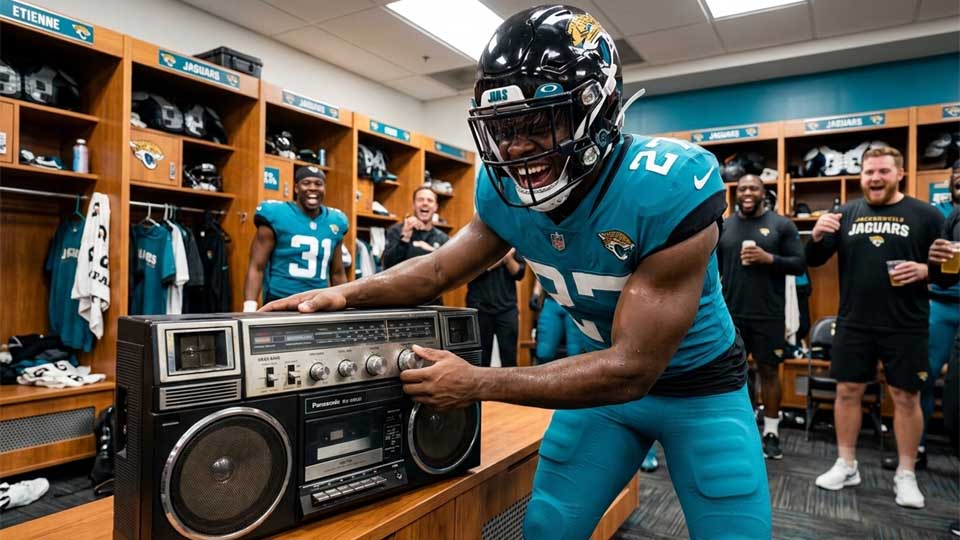
Using TriSync Sports to Find Running Backs With the Opportunity to Deliver Big NFL DFS Scores
Running back is different.
A wide receiver might see:
6 targets.
A tight end might see:
5 targets.
But a heavily used running back could receive:
18 carries
plus:
5 targets.
That's potentially:
23 OPPORTUNITIES
to generate fantasy production.
Carries.
Receptions.
Rushing yards.
Receiving yards.
Touchdowns.
That's why volume has always mattered at running back.
But there's a problem.
Not all volume is equal.
Twenty carries into a difficult defensive front may not produce much.
Fifteen carries with no receiving work can disappear when the team falls behind.
A running back may receive plenty of touches but have little access to the goal line.
Another back may receive fewer total touches but dominate:
Passing-down work
red-zone opportunities
and
high-value touches.
That's where TriSync Sports can help.
The goal of the:
RB VOLUME STRATEGY
isn't simply to find running backs who touch the football a lot.
It's to identify running backs whose:
VOLUME + TRISYNC OUTLOOK + DFS VALUE
create the strongest opportunity for fantasy production.
Start With Opportunity
Before anything else, ask:
How is this running back getting the football?
We're interested in:
Carries
Targets
Receptions
Red-zone opportunities
and
expected role.
A running back can't score fantasy points without opportunity.
That's the foundation.
But it's only the beginning.
Carries Matter
Let's start with the obvious.
A running back expected to receive:
20 CARRIES
has more rushing opportunities than one expected to receive:
8.
More carries create more chances for:
Yards
first downs
big runs
and
touchdowns.
But don't make the mistake of assuming:
MORE CARRIES = BETTER DFS PLAY.
We need context.
Targets May Be Even More Valuable
Especially on DraftKings.
A rushing attempt gives the RB one primary opportunity:
Run the football.
A target can potentially create:
A reception
receiving yards
and
a better chance for a touchdown.
That means a running back who participates heavily in the passing game has another path toward fantasy production.
Imagine:
RB A
20 carries
1 target
versus:
RB B
15 carries
6 targets
RB A has more rushing volume.
But RB B may have the more valuable overall DFS role.
Why?
Because those six targets can create receptions and receiving yards in addition to his rushing production.
That's:
MULTIPLE PATHS TO POINTS.
Think in Total Opportunities
Instead of looking only at carries, think about:
CARRIES + TARGETS.
Suppose:
RB A
18 carries
2 targets
Total opportunities:
20
RB B
14 carries
7 targets
Total opportunities:
21
Suddenly the workload looks very different.
RB B isn't necessarily a lower-volume running back.
His volume is simply coming through a different combination of opportunities.
And for DFS purposes, that can be extremely attractive.
But Targets Aren't Guaranteed Receptions
Keep the distinction clear.
A target isn't automatically a reception.
Still, targets tell us something important:
The offense is trying to get the running back involved in the passing game.
That matters.
Especially if the back regularly runs routes and remains on the field during passing situations.
A true three-down running back can accumulate points in almost any game environment.
The Three-Down Back
The ideal volume profile is straightforward.
We want a running back who can stay involved when his team:
Leads
Trails
or
plays a close game.
If his team leads?
He can receive carries.
If the game stays close?
He remains involved.
If his team falls behind?
He can catch passes.
That gives us:
GAME-SCRIPT PROTECTION.
And that's incredibly valuable.
Game Script Can Destroy Rushing Volume
Imagine a running back whose role is almost entirely:
EARLY-DOWN RUSHING.
His team falls behind:
21-3.
What happens?
The offense may abandon the running game.
Now the 20 carries we hoped for become:
10.
That's a problem.
Compare that with a pass-catching RB.
His team falls behind.
Instead of disappearing, he begins receiving:
Checkdowns
screens
and
short passing targets.
His fantasy opportunity may actually increase.
That's why receiving involvement is such an important part of RB Volume Strategy.
Goal-Line Volume Is Different
Not every touch has equal fantasy value.
A carry from your own,
20-yard line
isn't the same as a carry from an opponent's,
2-yard line.
Goal-line opportunities provide direct access to:
TOUCHDOWNS.
That means a running back with:
16 carries
and
heavy goal-line usage
may offer more fantasy upside than another back receiving:
20 carries
between the 20s.
When evaluating volume, ask:
WHERE are the opportunities happening?
High-Value Touches Matter
This gives us a better way to think about RB volume.
We're not merely counting touches.
We're looking for:
HIGH-VALUE TOUCHES.
Those include:
Targets
Receptions
Red-zone carries
Goal-line carries
and
touches in scoring situations.
A running back with fewer total touches but more high-value opportunities may be the better DFS selection.
Now Bring in TriSync Projection
Opportunity tells us:
HOW MUCH WORK THE PLAYER MAY RECEIVE.
TriSync Projection tells us:
HOW STRONGLY WE EXPECT HIM TO PERFORM.
Now we're combining:
ROLE + EXPECTED PERFORMANCE.
Suppose two backs are expected to receive similar workloads.
One carries a much stronger TriSync Projection.
That becomes important.
We're no longer choosing between two 20-touch running backs.
We're choosing between two 20-touch backs with:
DIFFERENT PERFORMANCE EXPECTATIONS.
TriSync Value Projection Adds Salary
Now bring in the:
This adds the DFS question:
What are we paying for that opportunity?
Imagine:
RB A
Salary: $8,300
Expected opportunities: 22
Strong TriSync Projection
RB B
Salary: $6,200
Expected opportunities: 20
Similar TriSync Projection
If RB B also carries the stronger:
TriSync Value Projection,
we have something very interesting.
We're receiving comparable workload and expected performance for:
$2,100 LESS.
That salary can improve another position.
Volume + Value Can Be Powerful
This is one of the strongest combinations we're looking for:
HIGH VOLUME
plus
HIGH TRISYNC VALUE PROJECTION.
A cheaper running back who suddenly receives:
18-22 touches
can become one of the most important players on the slate.
This often happens because of:
Injury
depth-chart changes
role changes
or
a teammate being inactive.
The salary may still reflect the player's old role.
But his opportunity now reflects:
A NEW ROLE.
That's where tremendous DFS value can appear.
Injury Replacements Deserve Immediate Attention
Suppose the starting RB is ruled out.
The backup costs:
$5,100.
Suddenly he's expected to receive:
15-18 carries
plus:
3-5 targets.
That can completely change the slate.
But don't automatically roster him.
Check:
TriSync Value Projection
Lineup Signal
Output Level
Points Min
Points Max
and
the actual expected role.
Cheap volume is attractive.
TriSync-supported cheap volume is better.
Lineup Signal Helps Define the Opportunity
Now examine the:
LINEUP SIGNAL.
A high-volume running back carrying:
CORE
deserves serious attention.
So does a:
PREMIUM.
But perhaps the most interesting combinations for this strategy are:
VALUE+
and
VALUE.
Why?
Because now we're potentially combining:
Strong workload
with
salary efficiency.
That's exactly what we want.
Points Min Matters for Running Backs
Volume often helps establish:
FLOOR.
A running back receiving 20+ opportunities has multiple chances to accumulate points.
Even without a touchdown, he may produce through:
Rushing yards
receptions
and
receiving yards.
That's why:
POINTS MIN
can be useful.
Especially for cash games.
A high-volume RB with a strong Points Min can become an excellent foundation.
Points Max Matters for GPPs
For tournaments, we also need:
CEILING.
Suppose:
RB A
Expected opportunities: 21
Points Max: 26
RB B
Expected opportunities: 19
Points Max: 39
RB A has slightly more volume.
But RB B may have:
Greater receiving opportunity.
More explosive ability.
More goal-line work.
Or stronger TriSync performance conditions.
For a GPP?
RB B may be the more interesting selection.
Volume establishes opportunity.
Ceiling tells us what that opportunity might become.
Cash and GPP Use Volume Differently
This strategy works for both contest types.
But the priorities change.
For:
CASH
we emphasize:
Secure workload
Receiving involvement
Points Min
Aligned profile
Strong TriSync Projection
and
reasonable salary.
For:
GPP
we increase the emphasis on:
Points Max
Touchdown opportunity
Explosive-play potential
Receiving ceiling
TriSync Value Projection
and
Hi Variance settings.
Same position.
Different objective.
Output Level Provides Performance Context
Now examine:
OUTPUT LEVEL.
Excellent.
Good.
Fair.
Suboptimal.
Suppose we find:
A 20-touch running back.
Excellent Output Level.
Strong TriSync Projection.
Strong Value Projection.
Value+ Lineup Signal.
Large Points Max.
That's a powerful combination.
The football opportunity and TriSync conditions are pointing in the same direction.
Don't Automatically Reject Fair
Remember:
Volume itself has value.
Suppose a running back enters a:
Fair
Output Level.
But he's expected to receive:
22 touches
and costs only:
$5,700.
His TriSync Value Projection remains strong.
His Points Max remains attractive.
We shouldn't automatically reject him because he isn't Excellent.
The complete DFS picture matters.
And Don't Automatically Play Excellent
The reverse is also true.
A running back may be in an:
Excellent
Output Level.
But he's part of a three-man committee.
Maybe he's expected to receive:
7 carries
and
1 target.
That's limited opportunity.
Performance conditions may be excellent.
But he still needs the football.
That's why this strategy combines:
TRISYNC + VOLUME.
Neither should be evaluated alone.
Volume Can Beat Talent in DFS
This is one of the uncomfortable realities of fantasy football.
The better real-life running back isn't always the better DFS selection.
Suppose:
RB A
Elite talent.
12 expected opportunities.
Salary: $7,400
RB B
Good player.
22 expected opportunities.
Salary: $6,000
If TriSync also supports RB B?
The second player may be the much stronger DFS selection.
We're not drafting an NFL roster.
We're trying to score:
FANTASY POINTS.
Opportunity matters.
Watch for Running Back Committees
Committees can make volume difficult to predict.
Suppose three running backs split:
Early-down carries.
Passing-down work.
Goal-line work.
Now nobody owns the entire opportunity.
That doesn't automatically make every back unusable.
But we need to understand:
WHO OWNS THE HIGH-VALUE TOUCHES?
Maybe RB A gets most carries.
RB B gets most targets.
RB C handles goal-line work.
Their fantasy opportunities are very different even if their snap counts appear similar.
Don't Chase Last Week's Touchdowns
A running back scores:
THREE TOUCHDOWNS.
Everyone notices.
But how did it happen?
Did he receive:
22 opportunities?
Eight opportunities?
Three goal-line carries?
Was the workload sustainable?
Or did he simply convert every scoring chance?
Touchdowns are valuable.
But they're volatile.
Look beyond the fantasy score.
Ask:
WAS THE VOLUME REAL?
Chase Opportunity, Not Yesterday's Points
A running back may score only:
9 fantasy points
but receive:
18 carries
6 targets
and
3 red-zone opportunities.
Another RB scores:
22 points
on:
8 carries
1 target
and
2 touchdowns.
Which player has the more interesting future DFS profile?
Often:
The first one.
The points weren't there.
But the opportunity was.
TriSync can then help us determine whether the upcoming performance conditions support another attempt.
Volume Trends Matter
Don't look only at season averages.
Roles change.
Maybe a running back received:
8 opportunities three weeks ago.
Then:
12 opportunities two weeks ago.
Then:
18 opportunities last week.
Something may be happening.
Perhaps he's earning a larger role.
Perhaps a teammate is losing work.
Perhaps the offense has changed.
Increasing volume combined with a strong TriSync outlook can create:
A DFS opportunity before everyone fully recognizes it.
Decreasing Volume Is a Warning
The opposite matters too.
Suppose a well-known RB still carries an expensive salary.
But his opportunities have fallen:
22
Then 17.
Then 12.
Maybe another back is taking passing-down work.
Maybe the team is reducing his snaps.
Maybe he's losing goal-line opportunities.
The player's name hasn't changed.
His role has.
Don't pay yesterday's salary for today's workload.
Matchup Still Matters
Volume is the foundation.
But defensive matchup can affect how efficiently that volume turns into points.
Look at the opponent.
How strong is the defense?
How does TriSync evaluate the defensive side?
How does the matchup fit the running back's role?
A receiving RB may still have strong opportunity against a difficult rushing defense because his production can come through the air.
Again:
HOW the player gets his volume matters.
Team Offense Projection Can Add Context
TriSync's Team Projections can help us understand the larger environment.
If the player's offense carries a strong projection, that may create:
More scoring opportunities
More red-zone trips
and
more touchdown potential.
If the offense is projected poorly?
The running back may still succeed.
But we should understand the challenge.
This is especially important for expensive backs who need touchdowns to justify premium salaries.
The Opposing Defense Matters Too
Now compare:
TEAM OFFENSE
with
OPPOSING DEFENSE.
Suppose a high-volume RB has:
Strong TriSync Projection.
Strong Value Projection.
Excellent Output Level.
And his offense rates favorably against the opposing defense.
That's multiple pieces of evidence pointing in the same direction.
Those are the running backs we want to identify.
Positive Game Script
A running back's dream scenario can be:
HIS TEAM GETS A LEAD.
Why?
The offense may run more frequently in the second half.
That creates additional carries.
If the RB is also the goal-line back?
Even better.
This makes high-volume backs on strong offenses particularly interesting.
But remember:
Game script is a possibility.
Not a guarantee.
That's why receiving involvement provides valuable protection.
Negative Game Script
Now suppose the team falls behind.
A pure rushing back may lose opportunities.
But a receiving RB might gain them.
That's why we should ask:
WHAT HAPPENS TO THIS PLAYER IF THE GAME GOES WRONG?
If the answer is:
He still catches passes,
we have a more resilient DFS profile.
If the answer is:
He disappears,
we have more risk.
The Ideal DFS Running Back
If we could design one, we'd want:
Heavy carries
Strong target volume
Goal-line work
Red-zone usage
Strong TriSync Projection
High TriSync Value Projection
Strong Points Min
Large Points Max
Favorable Lineup Signal
and
a good team environment.
We're not going to find all of those, every week.
The strategy is about finding:
THE BEST COMBINATION AVAILABLE.
RB Volume + TriSync Value Projection Strategy
These two strategies fit naturally together.
First, identify the backs with:
STRONG WORKLOADS.
Then compare:
TRISYNC VALUE PROJECTION.
Now we're asking:
Which high-volume back gives us the best opportunity for the salary?
This can help us avoid paying $8,500 for volume we can get for:
$6,500.
The $2,000 savings can become another lineup upgrade.
RB Volume + Balanced Cash
This is another natural combination.
For cash games, look for:
Secure touches
Receiving work
strong Points Min
Aligned profile
and
strong TriSync Projection.
We aren't necessarily searching for the RB most likely to score 35.
We're searching for:
DEPENDABLE OPPORTUNITY.
A high-volume three-down back can become an excellent cash foundation.
RB Volume + Marquee & Marginal
Sometimes the volume back is:
MARQUEE.
An elite RB receiving:
20+ carries.
Targets.
Goal-line work.
Strong TriSync support.
Maybe we pay the premium.
Other times the high-volume back is:
MARGINAL SALARY.
Perhaps an injury created a new starter.
Now we're getting premium opportunity for a lower salary.
That's one of the best scenarios in DFS.
RB Volume + Contrarian Leverage
This combination can be extremely interesting.
Suppose everyone wants:
RB A.
He has obvious volume.
But TriSync identifies:
RB B
with:
Comparable workload.
Higher Value Projection.
Larger Points Max.
Excellent Output Level.
And lower expected popularity.
Now RB B may provide:
CONTRARIAN LEVERAGE.
We're not fading volume.
We're simply finding it somewhere else.
RB Volume + Game Stack
Running backs can also fit Game Stack constructions.
Suppose we have:
QB A + WR A.
The opponent's running back carries:
Strong volume.
Receiving work.
Strong TriSync Value Projection.
Now:
RB B
can become the Bring-Back.
If Team A scores heavily, Team B may need its RB involved as both runner and receiver.
A versatile RB can survive multiple game scripts.
RB Volume + QB Stack
Remember our rule for direct QB stacking.
A running back averaging:
5+ PASSING TARGETS PER GAME
can become a legitimate QB stacking partner.
Why?
Because now the RB can score fantasy points on the same plays as the QB.
QB throws.
RB catches.
Both score.
A high-volume receiving RB gives us:
RUSHING VOLUME + STACKING CORRELATION.
That's a powerful combination.
A Hypothetical RB Comparison
Imagine three running backs:
RB A
Salary: $8,700
Carries: 19
Targets: 3
TriSync Value Projection: 2.55
Points Min: 13
Points Max: 31
Lineup Signal: Premium
RB B
Salary: $6,600
Carries: 16
Targets: 6
TriSync Value Projection: 3.30
Points Min: 14
Points Max: 38
Lineup Signal: Value+
RB C
Salary: $4,900
Carries: 10
Targets: 2
TriSync Value Projection: 2.05
Points Min: 6
Points Max: 22
Lineup Signal: Filler
Which player has the most carries?
RB A.
Which player has the most attractive complete DFS profile?
Very possibly:
RB B.
He offers:
22 potential carries + targets.
Strong receiving involvement.
Higher Value Projection.
Higher Points Min.
Higher Points Max.
Value+ signal.
And:
$2,100 in salary savings.
That's exactly what RB Volume Strategy is designed to uncover.
Volume Doesn't Mean Touches Alone
This is the big takeaway.
When we say:
RB VOLUME,
we don't simply mean:
CARRIES.
We mean:
OPPORTUNITY.
That includes:
Carries
Targets
Receptions
Routes
Red-zone work
and
game-script resilience.
Then TriSync helps us evaluate:
WHAT THAT OPPORTUNITY MAY BECOME THIS WEEK.
The TriSync RB Volume Checklist
Before selecting a running back, ask:
1. How many carries can he realistically receive?
Start with rushing opportunity.
2. How many targets can he realistically receive?
Receiving volume matters.
3. What are his total opportunities?
Carries + targets gives us a better picture.
4. Does he catch passes?
Especially important on DraftKings.
5. Does he own the goal-line role?
High-value touches matter.
6. Does he receive red-zone work?
Touchdown opportunity matters.
7. Is he part of a committee?
Understand who owns which opportunities.
8. What happens if his team falls behind?
Can he survive negative game script?
9. What happens if his team gets ahead?
Could rushing volume increase?
10. What is his TriSync Projection?
How strongly do we expect him to perform?
11. What is his TriSync Value Projection?
Is the workload attractive for the salary?
12. What is his Lineup Signal?
Core, Premium, Value+ and Value deserve attention.
13. What is his Output Level?
Use it as performance context.
14. What is his Points Min?
Especially useful for cash.
15. What is his Points Max?
Critical for GPP ceiling.
16. Is his workload increasing or decreasing?
Roles change.
17. Is the volume supported by current injury and depth-chart information?
Confirm the opportunity.
18. Am I chasing last week's touchdowns or this week's workload?
Always prefer the forward-looking question.
Opportunity First. TriSync Second. Salary Third.
That's the basic process.
First:
FIND THE WORK.
Which running backs are likely to receive meaningful opportunities?
Then:
CHECK TRISYNC.
Which of those backs have the strongest:
TriSync Projections?
Value Projections?
Lineup Signals?
Output Levels?
Points Min and Max?
Then:
CHECK THE PRICE.
Which combination gives us the strongest overall lineup?
That's much better than starting with:
“Who is the cheapest RB?”
or:
“Who scored the most points last week?”
Conclusion: Volume Creates the Opportunity
Running back fantasy production begins with:
OPPORTUNITY.
Carries matter.
Targets matter.
Goal-line touches matter.
Red-zone opportunities matter.
Receiving work matters.
But volume alone isn't enough.
We want volume that TriSync indicates has a strong opportunity to become:
FANTASY PRODUCTION.
Start with workload.
Then examine:
TriSync Projection
TriSync Value Projection
Lineup Signal
Output Level
Points Min
Points Max
salary
and
the team environment.
For cash:
Prioritize secure workload, receiving involvement and floor.
For GPP:
Add ceiling, touchdown potential and explosive upside.
Don't chase last week's touchdowns.
Don't assume every carry has equal value.
Don't confuse playing time with opportunity.
And don't pay premium prices for a famous running back when TriSync identifies comparable volume and stronger value somewhere else.
Find the touches.
Find the targets.
Find the high-value opportunities.
Confirm the TriSync support.
Then pay the right price.
That's the TriSync Sports RB Volume Strategy.
Bet responsibly. Past performance of any analytical system does not guarantee future results. TriSync Sports is intended as an informational and entertainment tool.